TENS (Transcutaneous Electrical Nerve Stimulation)
TENS is one of the three methods of nerve stimulation used to treat long-term pain: TENS (electrodes on the skin), PNS (electrodes under the skin) and Spinal stimulation (electrodes in the spine).
Note - if you use TENS to help with coccyx pain, you need to be careful not to use it to mask the pain, sit longer, and aggravate the cause of the pain. It is not a substitute for treatments to remove the source of the pain. However, if you know that there is no remaining physical cause for the pain (for instance after removal of the coccyx), then TENS can be very helpful.
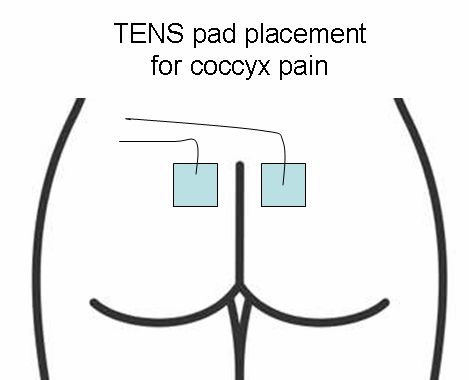
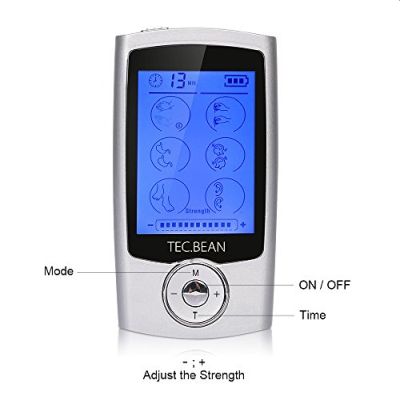
Electrically conducting pads are attached to the skin and a low current alternating voltage is applied between them. Pain may be reduced, possibly on the same principle suggested to underlie acupuncture and scratching to relieve an itch, that stimulation of one part of the nervous system can block signals in another pathway. Small TENS units are available that allow TENS to be used at any time.
Research (here, here and here) has shown that TENS can block neuropathic pain (pain caused by the nervous system itself).
If sitting sets off your neuropathic pain, you can place the electrodes either side of your coccyx, and switch on the TENS when sitting, and switch it off when you stand up.
Diane writes: The signals block out the pain signals you would normally be experiencing. The pack clips to your belt or waistline. It is not a solution, but with pain that will be around a long time, it is another device for comfort. I truly believe it is my savior for being able to work. You can't get dependent on it, so my surgeon thinks it replaces drugs for daytime comfort.
Bernadette writes: I've tried everything else and this is the only thing that has helped. I use the unit all day and would be completely housebound without it. From time to time you do need to buy extra pads and leads but it is still cheaper and much more effective than taking drugs.
Updated 2024-02-26
