Shockwave therapy (ESWT) for coccyx pain
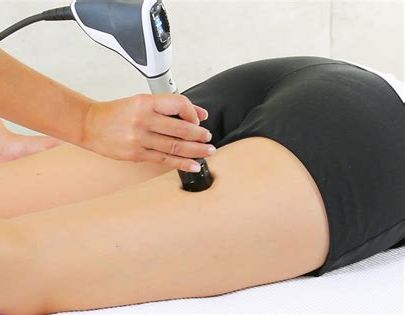
Note: This picture does not show treatment for coccyx pain. I couldn't find an image showing that.
Shockwave therapy (also known as ESWT, or Extracorporeal Shock Wave Therapy) is used to treat patients with chronic tendon problems such as tennis elbow. The 'shock waves' are inaudible, high-energy sound waves. The treatment is thought to work by inducing microtrauma in the tissues treated, which causes a healing response by the body. Although there is evidence to say that this procedure is safe, there are still uncertainties about how well it works. Some doctors use it to treat coccydynia, but this is not yet routine.
Evidence for effectivenes of shockwave therapy
A randomised trial by Lin et al compared shockwave therapy with diathermy/interferential current therapy for coccydynia in 41 patients. The pain scores for both groups of patients averaged 6/10 before treatment. At 8 weeks after treatment the average scores had reduced to 2/10 for the shockwave patients, but only to 4/10 for the diathermy/interferential current patients. The long-term outcome was not measured.
Haghighat et al treated 10 coccydynia patients with shockwave therapy. The average pain score was 7/10 before treatment, and was measured again at one, two and seven months after treatment, and found to be about 3/10 at these times.
Marwan et al treated 23 coccydynia patients with a median pain score of 7/10 using shockwave therapy. After 6 months, 6 of the patients had no benefit and the remaining 17 had a median pain score of 2/10.
Aydin et al treated 23 coccydynia patients with a average pain score of 9.6/10 using shockwave therapy. After 6 months, the average pain score was 3.4/10.
The studies summarised above used different shockwave equipment and different treatment regimes.
These results, though they do not include long-term follow-up, suggest that shockwave therapy may be an effective treatment for many coccydynia patients.
Updated 2021-07-25
